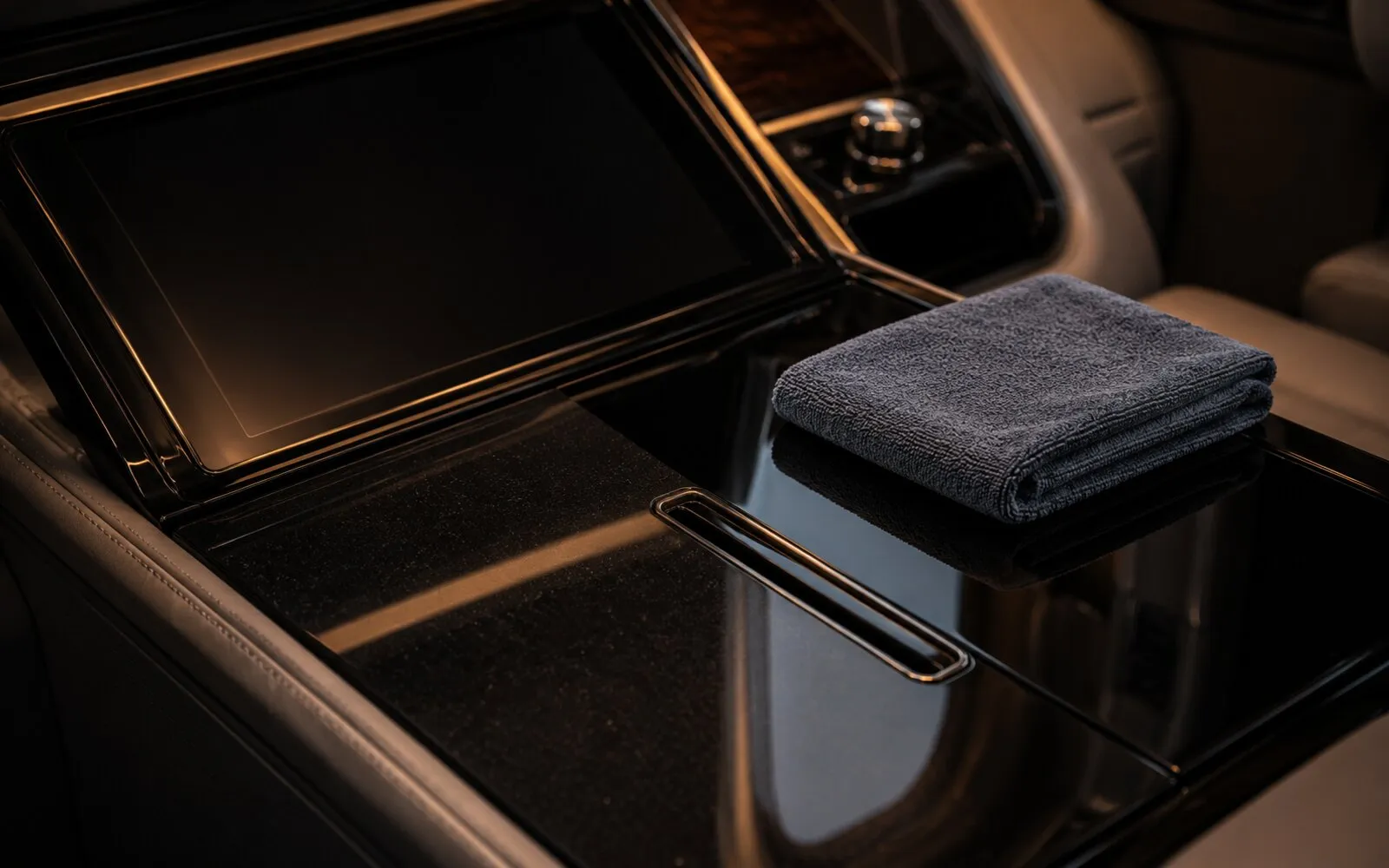
A cabin or a car interior gets judged up close: the grain in a wood veneer, how clear a navigation screen looks at an angle, the depth in a gloss-black panel. Residue undoes all of it. It is the film a cleaner leaves behind, and on surfaces like these it does more harm than a streak ever will.
In aircraft and exotic car work, where one interior panel can cost thousands to replace, residue is not a cosmetic footnote. It decides whether a finish looks looked after or slowly goes dull.
What residue is
Most cleaners do two jobs. They lift soil, and they leave something behind: surfactant that was never wiped away, fragrance carriers, dressings meant to add gloss. On a kitchen counter nobody notices. On a touchscreen, a vinyl armrest or a gloss-black trim piece, that film is the first thing your eye and your fingertips find.
It shows up as haze under low light, a smear when a screen catches a reflection, and a slick or tacky feel on the things you touch most. It is also why a surface that looked right at noon looks dusty by evening.
Why premium surfaces show it first
The qualities that make these materials worth having are the same ones that give residue away. Deep gloss, soft-touch coatings and anti-glare layers all reveal a film immediately.
- Touchscreens and displays pick up glare and fingerprints faster when there is an oily layer on the glass.
- Vinyl and soft-touch trim hold heavy dressings on the surface, where they collect dust and change how the material feels.
- Piano-black panels are the most reflective surface in most cabins, so a thin film reads straight away as a smear.
- Matte and satin finishes are the least forgiving, because anything that adds gloss changes the finish itself.
The cost of a shiny clean
A lot of consumer products are made to impress for a day, which is why they lean on gloss and fragrance. The bill comes later. Dust returns sooner, steering wheels and switchgear go slick, and dressing builds up until it has to be stripped before the next clean.
On a managed aircraft or a collector car that cycle adds hours of labor, wears sensitive materials faster, and makes a cared-for asset look neglected between details.
What surface-conscious cleaning looks like
The professional standard runs the other way. Lift the soil without anything aggressive enough to put the finish at risk, leave nothing behind that you can see or feel, and get the same result on the hundredth use as on the first.
Habits that matter as much as the product
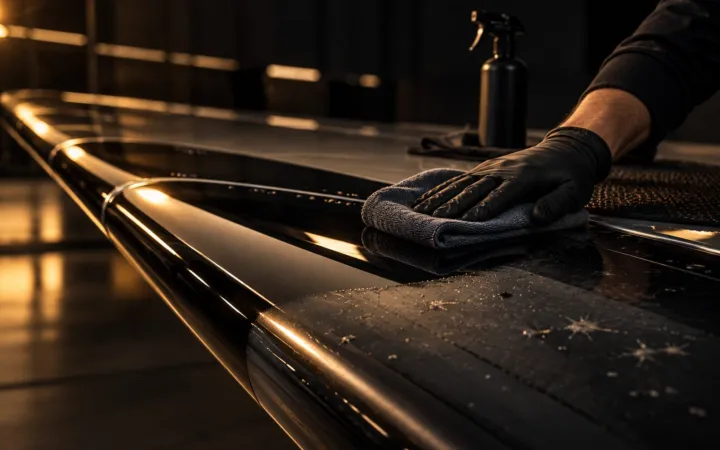
Spray the cloth rather than the screen, and never spray into vents or the edge of a display. Use clean microfiber and turn it to a fresh face often, because a loaded cloth only moves residue around. Work one section at a time and wipe to dry, which is the part that actually removes residue instead of spreading it. On matte finishes and unfamiliar materials, try a small hidden area first.
Where sWype fits
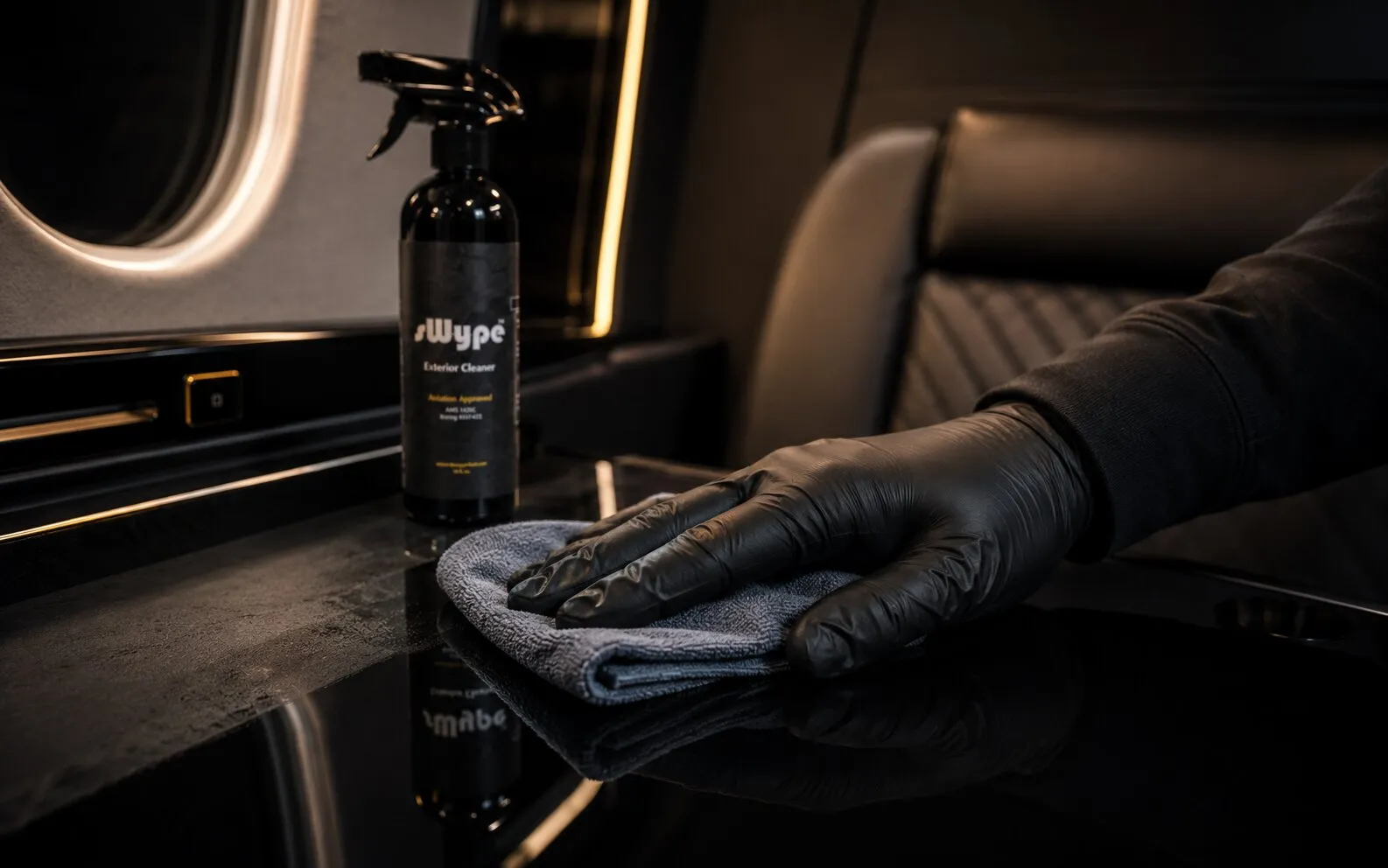
sWype was developed in aircraft and high-end car detailing for exactly this. It cleans and wipes away without leaving a haze, so screens stay clear and touchpoints stay dry to the touch. For heavier work such as engine bays, door jambs and exhaust staining, Dend does the deep clean and sWype finishes. There is more on how it is made on Why sWype.
Judge an interior by what you cannot see on it. Get the residue right and the rest follows.